
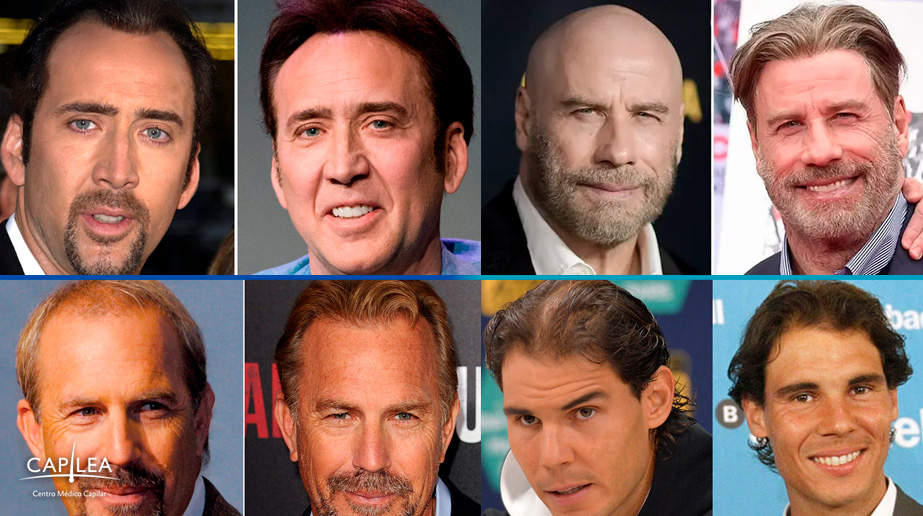
More and more public figures are openly speaking about their hair transplant procedures, helping normalize male hair restoration treatments. From international celebrities like Elon Musk and Wayne Rooney to Spanish celebrities such as Iker Casillas and Miguel Bosé, these cases show how a hair transplant can improve density and frontal hairline appearance when there is proper medical planning.
In this blog post, we bring together confirmed, documented, and widely discussed cases of celebrities with hair transplants, and also explain what you should consider before deciding on a hair restoration procedure.
What is hair transplantation?
Medically, a hair transplant involves transferring follicular units from a donor area (usually the back or sides of the scalp) to areas affected by thinning or baldness. The goal is to achieve natural, balanced growth, always considering factors such as hair quality, the progression of hair loss, and the design of the frontal hairline.
Celebrities with hair transplants: popular cases
| Celebrity | Observed level of hair loss* | Outcome |
| David Beckham | Mild frontal thinning (approx. Norwood II–III) | Over the years, a more even hairline and improved frontal density has been observed compared to earlier stages. |
| Rafael Nadal | Moderate recession and crown thinning (approx. Norwood II–III) | In different public appearances, improved frontal coverage and a more stable-looking hairline can be seen. |
| George Clooney | Mild frontal recession (approx. Norwood II–III) | Maintains a mature, natural hairline with subtle density changes over time. |
| Elon Musk | Advanced frontal loss in youth (approx. Norwood IV–V) | One of the most noticeable transformations, with visible improvement in frontal density and top coverage. |
| Ben Affleck | Mild frontal recession and thinning (approx. Norwood II–III) | His hair evolution stands out for maintaining a natural and consistent-looking hairline. |
| Nicolas Cage | Moderate frontal recession (approx. Norwood III–IV) | Visible variations in density and overall coverage have been observed over time. |
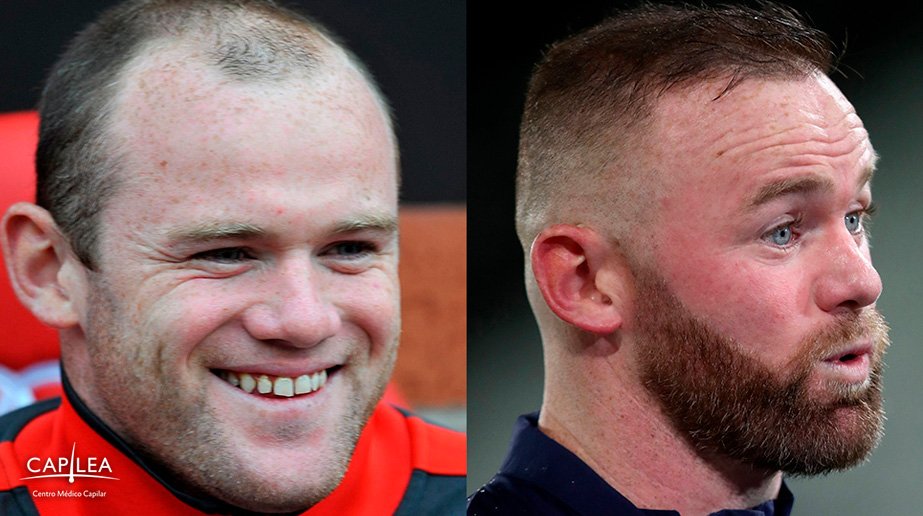
| Wayne Rooney | Advanced recession and frontal thinning (approx. Norwood III–IV) | Showed a clear improvement in the hairline and increased density after his procedure. |
| Kevin Costner | Moderate frontal thinning (approx. Norwood III) | Maintains a mature hairline with gradual, age-related density changes. |
| Antonio Banderas | Mild-to-moderate frontal thinning (approx. Norwood III) | In recent years, a more uniform appearance and improved frontal density has been noted. |
| James Nesbitt | Frontal and mid-scalp thinning (approx. Norwood IV) | Shows progressive restoration with visible density improvements after multiple procedures. |
| Iker Casillas | Pronounced recession (approx. Norwood III) | Hairline appears more defined and balanced compared to earlier years. |
| Jimmy Carr | Moderate frontal recession (approx. Norwood III) | Most noticeable change is a lower, denser, more defined hairline. |
| Bradley Cooper | Moderate frontal thinning (approx. Norwood II–III) | Subtle improvements in hair density and a more structured hairline have been observed over time. |
| William Levy | Mild frontal recession (approx. Norwood II–III) | Maintains a strong, youthful-looking hairline with occasional variations in density. |
| Miguel Bosé | Moderate frontal thinning (approx. Norwood III) | Over time, a more stabilized and refined hairline appearance has been noted. |
*Norwood scale estimates are approximate and based on publicly visible patterns, not clinical diagnoses.
What can we learn from these cases?
Looking at celebrities with hair transplants can help us understand what a well-executed result looks like, but it also provides several important lessons.
Natural results depend on design
It’s not just about “having more hair.” A natural-looking hairline must respect age, facial proportions, available density, and the future progression of hair loss.
The donor area has limits
Each patient has a finite number of follicular units available. That’s why proper planning and design are essential to achieve a balanced long-term result.
Results are not immediate
After the procedure, it’s normal to go through swelling, scabbing, and temporary shedding of transplanted hair before final growth appears. Hair recovery is gradual and progressive.
Not everyone needs surgery
In some cases, medical treatments or hair loss stabilization protocols may be a better first option before considering a transplant.
Hair transplant, hair systems, and treatments: they are not the same
Many times on social media, different hair restoration methods are confused.
- Hair transplant: uses your own hair to achieve permanent, natural growth in thinning areas.
- Hair system (prosthesis): an external system that mimics hair but does not generate real growth.
- Medical treatments: options such as minoxidil, finasteride, and PRP therapy can help slow hair loss or strengthen existing hair.
Because of this, not every visual change in a celebrity necessarily means they had a hair transplant.
Before getting a hair transplant, consider this
Before making a decision, it is essential to understand your specific case. Two people with similar hairline recession may require completely different approaches depending on the cause of hair loss, the stability of the condition, and the quality of the donor area.
At Capilea Mexico, the focus is not on replicating a celebrity result, but on designing a personalized plan that looks natural and makes sense for your age, hair type, and aesthetic goals. Schedule a free evaluation and take the first step toward restoring your hair and confidence.
FAQ
Which celebrities have had hair transplants?
Some of the most discussed cases include Elon Musk, Wayne Rooney, and Nicolas Cage, where noticeable improvements in hair density have been widely observed and commented on.
How long does a hair transplant last?
Transplanted hair is generally permanent. However, non-transplanted hair may continue to thin over time if there is no proper medical follow-up.
Is everyone a candidate for a hair transplant?
Not necessarily. It depends on the cause of hair loss, donor area quality, and the degree of alopecia.
Do hair transplants look natural?
Yes. When performed with proper medical planning, including correct hairline design and density distribution, results can look completely natural.