Does your beard grow unevenly? Do you have patchy areas that seem impossible to fill in? Have you tried oils and “miracle” products without seeing results? The reality is simple: no topical product can permanently fill areas where facial hair follicles do not exist.
A beard transplant is the only proven medical solution that relocates your own living hair follicles to the face. The result is facial hair that grows naturally and can be shaved, trimmed, and styled just like a natural beard.
In this article, we share real patient cases, explain the FUE technique, outline what to expect during each stage of recovery, and help you determine whether you may be a good candidate for the procedure.
Real beard transplant cases at Capilea Mexico
Every beard is different. That is why the first step before any procedure is understanding the patient’s goals and evaluating their facial hair growth characteristics.
Before: the design process
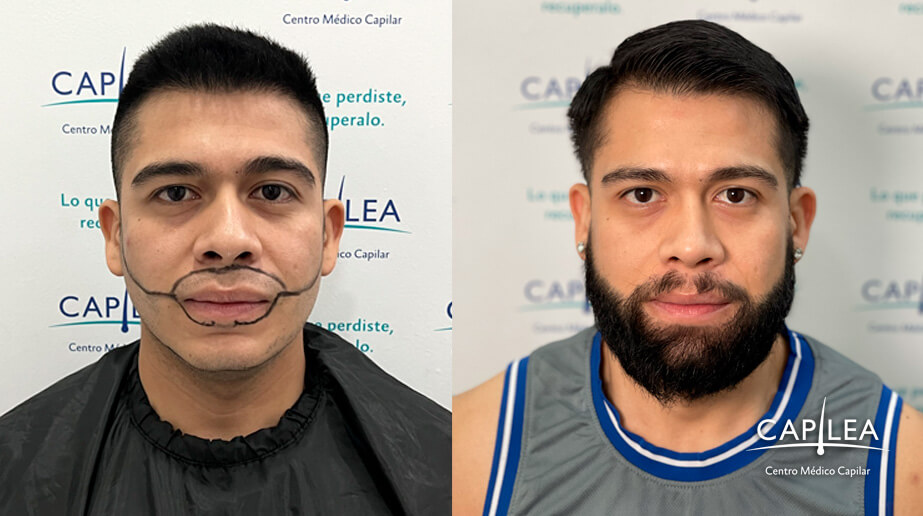
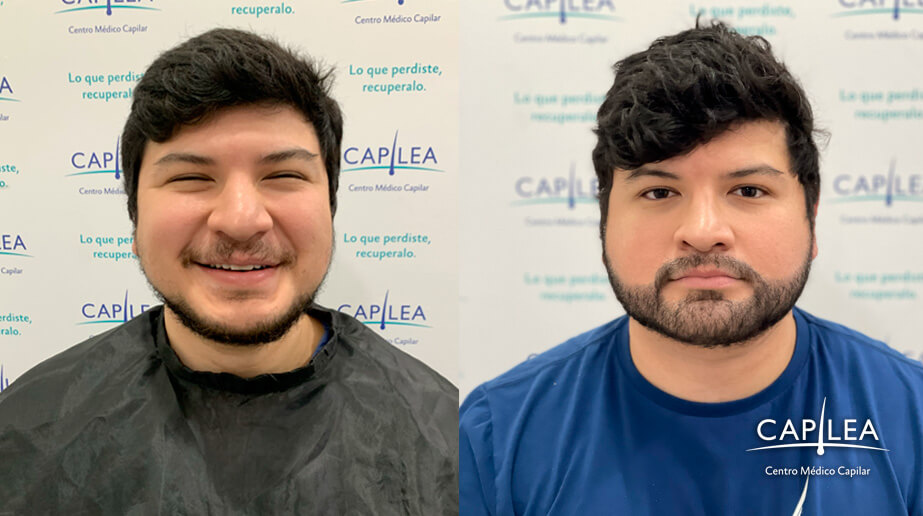
In this case, the patient presented a very common situation: he had reasonable density in the mustache and chin area but limited growth on the cheeks and in the connections between the sideburns and beard. This created visible gaps and an undefined appearance that could not be corrected through shaving techniques or cosmetic products.
During the consultation, the specialist designed the shape of the new beard directly on the patient’s face. This design is much more than a cosmetic outline, it determines the facial contour, symmetry, and precise distribution of each follicle to achieve a balanced and natural-looking result. Every detail is discussed and approved with the patient before the procedure begins.
After: results several months later
Several months later, the transformation is evident. The beard appears fuller and more uniform, with a defined shape and natural transitions between the sideburns, cheeks, mustache, and chin.
Most importantly, the new facial hair grows permanently because it comes from the patient’s own follicles. This means it can be shaved, trimmed, and styled exactly like any natural beard.
This case highlights two key factors behind a successful beard transplant: personalized design and precise implantation. The goal is not simply to fill empty spaces, but to create a beard that looks authentic and proportionate to the patient’s facial features.
What is a beard transplant and how does it work?
A beard transplant is an outpatient medical procedure that transfers healthy hair follicles from a donor area -typically the back of the scalp- to areas of the face where beard growth is thin or absent.
Depending on the patient’s needs, grafts can be placed in the cheeks, chin, mustache, sideburns, or connecting areas between them.
The reason this treatment provides permanent results is that the transplanted follicles retain the genetic characteristics of the donor area. Once they successfully establish themselves in their new location, they continue producing hair for life.
Is it the same as other beard growth treatments?
No. Although many products claim to stimulate facial hair growth, none can create new follicles where they do not already exist.
Minoxidil and other topical treatments may help strengthen existing hair, while options such as makeup or microblading only create a temporary visual effect. A beard transplant, on the other hand, adds real follicles that produce permanent hair growth.
The FUE technique: the gold standard for beard restoration
Several hair restoration methods exist today, but when it comes to beard transplantation, the FUE (Follicular Unit Extraction) technique has become the international gold standard.
The reason is simple: it allows individual follicular units to be extracted and implanted with the precision required to replicate the natural pattern of facial hair growth.
Why does Capilea use FUE?
The FUE technique offers significant advantages during both the procedure and recovery process. Because each follicular unit is extracted individually, there is no visible linear scar and recovery tends to be faster.
In addition, FUE allows surgeons to carefully control the angle and direction of every graft, an essential factor in a highly visible area such as the beard. The procedure is performed on an outpatient basis, allowing patients to return home the same day.
How many grafts do you need?
There is no universal number. Some patients only want to increase density in specific areas or fill small patches, while others wish to build a full beard from scratch.
As a result, the number of required grafts can range from a few hundred to more than 2,000. A medical evaluation is the only way to determine the appropriate number for your case.
Are you a good candidate for a beard transplant?
One of the advantages of beard transplantation is that it can help both individuals with genetically sparse facial hair and those who have lost hair due to scars or injuries.
However, not all cases are the same. The best candidates typically have:
- A sufficient donor area
- Good overall health
- Realistic expectations about the outcome
Certain situations may require a more detailed assessment, including skin disorders, clotting conditions, or medical issues that affect hair growth. For this reason, candidacy should always be confirmed through a specialized medical consultation.
What should you really expect after a beard transplant?
One of the most common questions patients ask is when they will see results. The reality is that transplanted hair follows a gradual and completely normal biological growth process.
First 48-72 hours: the most critical stage
During the first few days, the newly implanted follicles begin establishing themselves in their new location. At this stage, it is important to avoid impacts, friction, or pressure on the treated area.
Sleeping with your head elevated and carefully following your surgeon’s instructions helps protect the grafts during this critical period.
Weeks 1-2: scabbing and redness
As the skin heals, small scabs form around each follicle. Mild redness is also common. These scabs naturally fall off between days 10 and 14. Although it may be tempting to remove them manually, doing so could interfere with graft survival.
Weeks 3-4: shock loss
This is often the stage that causes the most concern among patients. The transplanted hairs typically shed a few weeks after the procedure, but this does not mean the transplant has failed.
Only the hair shaft falls out, the follicle remains healthy beneath the skin and will continue its normal growth cycle.
Months 3-6: new growth begins
Gradually, new hairs start to emerge. The beard begins gaining density and shape, although it will continue maturing over the following months.
Months 6-12: final results
Between the sixth and twelfth month, the final outcome becomes visible. The beard reaches its full density and develops the natural appearance that will remain long term.
Essential post-operative care
The success of a beard transplant depends not only on the procedure itself but also on proper aftercare. During the first few weeks, patients should:
- Follow the washing protocol provided by the medical team
- Avoid scratching the treated area
- Protect the beard from direct sun exposure
- Limit activities that cause excessive sweating
- Avoid alcohol and tobacco during the initial recovery period
Following these recommendations helps support proper follicle integration and maximize results.
Patience is key
A beard transplant can provide natural, permanent results, but it takes time. Changes do not appear immediately, and the final density largely depends on the quality and quantity of available donor follicles.
In some cases, one session is sufficient. In others, additional procedures may be recommended to increase density. The goal is always to create a realistic, proportionate beard that complements the patient’s facial structure.
Why choose Capilea Mexico?
The experience of the medical team and the quality of treatment planning are just as important as the technique itself. At Capilea Mexico, we have more than 25 years of experience in hair restoration and over 2,160 documented success cases.
Schedule a free consultation with Capilea Mexico. Our team can evaluate your facial hair growth, answer your questions, and create a personalized treatment plan to help you achieve a fuller, more even, and natural-looking beard.
FAQ
Does a beard transplant hurt?
No. A beard transplant is performed under local anesthesia, so the treatment area remains numb during the procedure. Mild discomfort or sensitivity afterward is normal but is usually manageable by following your doctor’s post-operative instructions.
Are the results permanent?
Yes. The transplanted follicles come from a scalp area that is typically resistant to hair loss. Once established in the beard, they continue growing permanently and can be shaved, trimmed, or styled like natural facial hair.
When will I see the final results?
Patience is essential. It is normal for transplanted hairs to shed during the first few weeks as part of the recovery process. New growth typically begins between months 3 and 6, while the final results are usually visible between months 6 and 12.
How much does a beard transplant cost in Mexico?
The cost varies depending on the number of grafts required, the technique used, and the specifics of each case. As a general reference, beard transplant procedures in Mexico typically range from MXN $20,000 to $60,000.