
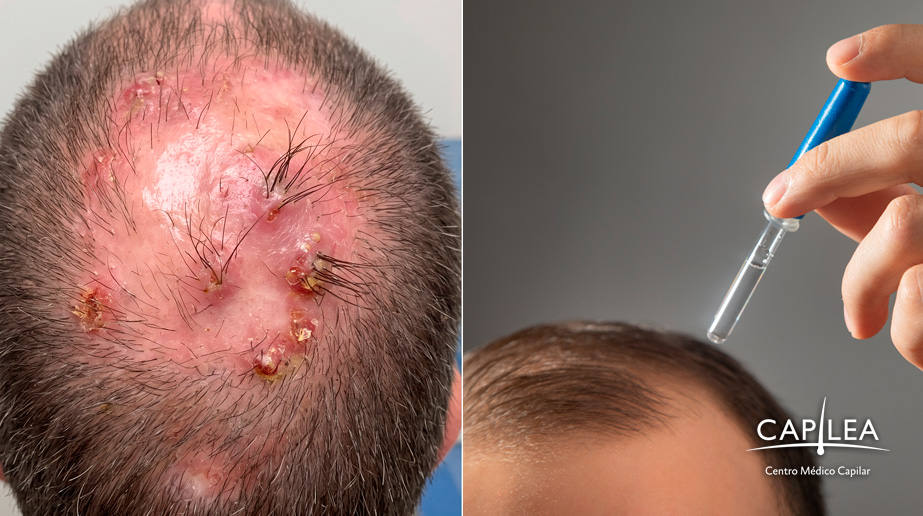
Have you noticed painful scalp bumps, pustules, or crusts that won’t go away? Have medicated shampoos failed to improve your symptoms? If so, you may be dealing with folliculitis decalvans, a rare inflammatory scalp condition that can permanently destroy hair follicles if left untreated.
The good news is that early folliculitis decalvans treatment can control inflammation, stop disease progression, and preserve healthy hair follicles.
In this guide, you’ll learn what folliculitis decalvans is, what causes it, how specialists diagnose it, the most effective treatment options available, and whether hair restoration procedures are possible after the disease becomes inactive.
What is folliculitis decalvans?
Folliculitis decalvans (FD) is a chronic inflammatory disease of the scalp skin that progressively destroys hair follicles. It is classified as a primary cicatricial alopecia (scarring alopecia), meaning that once a follicle is replaced by scar tissue, hair cannot grow back.
Because the hair loss is permanent, early diagnosis and treatment are essential to prevent further damage.
Who is most commonly affected?
Folliculitis decalvans can affect anyone, but it is more frequently diagnosed in:
- Young and middle-aged men (approximately 70% of cases)
- Women, less commonly
- Individuals who first notice symptoms on the crown or back of the scalp
Symptoms of folliculitis decalvans
The condition usually develops in flare-ups, alternating between active inflammation and periods of remission.
Common symptoms include:
- Pustules around hair follicles
- Yellowish crusts on the scalp
- Redness and inflammation
- Pain, burning, or itching
- Multiple hairs emerging from a single follicle (“tufted hair”)
- Smooth, shiny bald patches where scarring has already occurred
Even during remission, the disease has not disappeared. Ongoing medical follow-up remains important to reduce the risk of recurrence.
What causes folliculitis decalvans?
The exact cause remains unknown, but research suggests that several factors contribute to the disease.
Staphylococcus aureus
The bacterium Staphylococcus aureus is frequently found in affected hair follicles. Rather than acting as a simple infection, it appears to trigger an exaggerated immune response in genetically susceptible individuals, leading to permanent follicular destruction.
Recent studies also suggest that an imbalance in the scalp microbiome may play a significant role.
Is it autoimmune or contagious?
No. Although the immune system contributes to the disease process, folliculitis decalvans is not classified as a classic autoimmune disorder.
It is also not contagious. Even though bacteria are involved, the condition cannot be transmitted from one person to another.
What is the best treatment for folliculitis decalvans?
Currently, there is no permanent cure for folliculitis decalvans, and no single treatment works for every patient. The primary goals of folliculitis decalvans treatment are to:
- Control inflammation
- Reduce bacterial activity
- Prevent additional follicle destruction
- Preserve existing healthy hair
Hair that has already been lost in scarred areas cannot be restored through medication.
Antibiotic therapy
- Mild disease: Patients with early inflammation but few pustules may receive: topical clindamycin, mupirocin, fusidic acid, erythromycin. Some specialists may also prescribe oral isotretinoin depending on the clinical presentation.
- Moderate to severe disease: oral antibiotics are typically recommended. Tetracyclines, particularly doxycycline, are commonly used as first-line therapy because they provide both antibacterial and anti-inflammatory effects.
- Resistant cases: patients who do not respond to standard treatment may benefit from a prolonged course of clindamycin combined with rifampin, which has demonstrated good remission rates in clinical studies.
Corticosteroids and additional therapies
To reduce inflammation and relieve symptoms, dermatologists may prescribe: topical corticosteroids, intralesional corticosteroid injections and short courses of oral corticosteroids during severe flare-ups.
Topical or low-dose oral minoxidil may also be recommended to support remaining healthy hair, although it does not treat the underlying disease.
Treatment options for difficult cases
Patients with persistent or treatment-resistant disease may be candidates for therapies available at specialized hair restoration centers, including: photodynamic therapy, long-pulsed Nd:YAG laser therapy, and biologic medications such as adalimumab in selected refractory cases.
Because relapses are common after treatment is discontinued, long-term monitoring is essential.
How is folliculitis decalvans diagnosed?
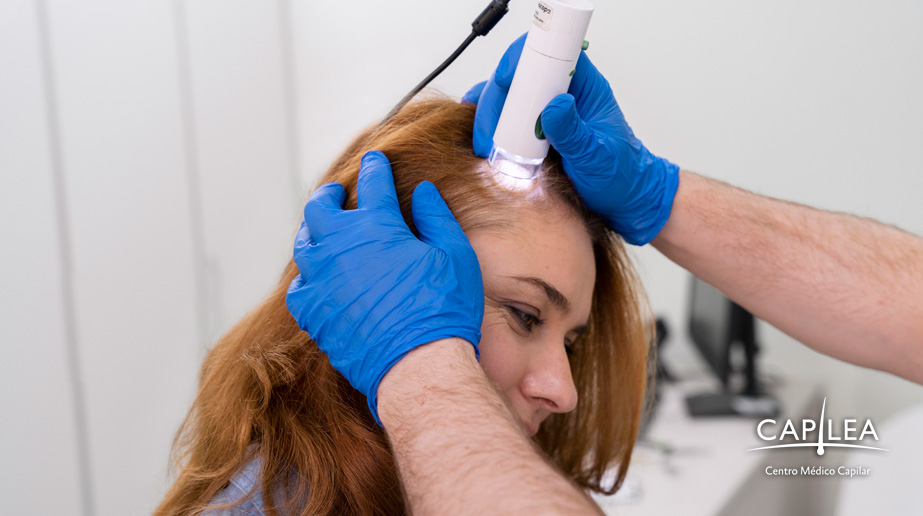
Diagnosis is primarily based on clinical examination. To confirm the diagnosis and guide treatment, specialists may perform:
- Trichoscopy to examine characteristic tufted follicles and inflammation
- Bacterial culture with antibiotic sensitivity testing
- Scalp biopsy when the diagnosis is uncertain or to differentiate FD from inflammatory fungal infections
Prognosis: how does folliculitis decalvans progress?
Folliculitis decalvans is a chronic disease characterized by recurring flare-ups. With appropriate treatment, many patients achieve long periods of disease control, although relapses may still occur.
| Stage | What happens | Recommended management |
| Active flare | Pustules, redness, inflammation, and ongoing follicle damage | Prompt antibiotic treatment to control inflammation |
| Remission | Active lesions disappear, but existing scars remain | Regular monitoring and maintenance therapy when indicated |
| Relapse | Symptoms return, often after stopping treatment | Resume or adjust treatment under medical supervision |
The earlier treatment begins, the more healthy follicles can be preserved.
Can you have a hair transplant after folliculitis decalvans?
Hair transplantation is considered only after the disease has remained completely inactive for an extended period. Surgery performed while inflammation is still active may trigger a relapse, and cases of disease reactivation following hair restoration procedures have been reported.
It is also important to distinguish folliculitis decalvans from the temporary folliculitis that may occasionally occur after hair transplantation, which is a mild, self-limiting reaction unrelated to the disease itself.
Every candidate should undergo a comprehensive evaluation by a hair restoration specialist before surgery is considered.
Schedule a free consultation at Capilea Mexico
At Capilea Mexico, we have more than 25 years of experience in hair restoration, with specialized clinics in Monterrey, Tijuana, and Mexico City.
If you’re experiencing unexplained hair loss, our medical team can evaluate your condition and develop a personalized plan before permanent hair loss progresses.
FAQ
Can folliculitis decalvans be cured permanently?
No. There is currently no definitive cure, but the disease can often be controlled successfully for long periods with appropriate medical treatment.
What shampoo should I use for folliculitis decalvans?
No shampoo can cure the condition. Your dermatologist may recommend a gentle shampoo or medicated products as part of your overall treatment plan.
Is hair loss from folliculitis decalvans reversible?
Hair loss in scarred areas is permanent because the follicles have been destroyed. Early treatment offers the best chance of preserving unaffected follicles.
Can stress make folliculitis decalvans worse?
Stress is not considered a direct cause, but it may contribute to inflammatory flare-ups in some individuals. Managing stress and maintaining regular medical follow-up may help support long-term disease control.