
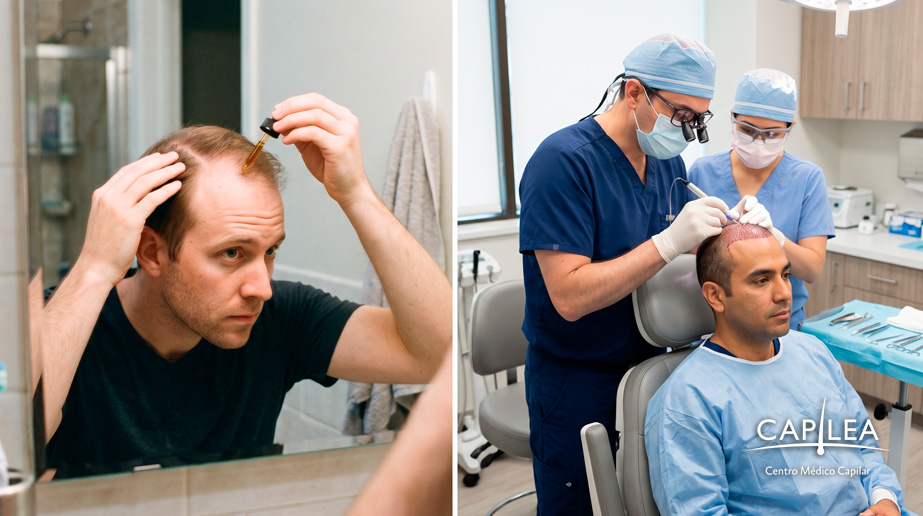
Topical finasteride can help slow hair loss and improve hair density in some men with male pattern baldness. A hair transplant, on the other hand, can restore coverage in areas where hair has significantly thinned or stopped growing.
The main difference is how each treatment works. Topical finasteride helps protect existing hair and requires ongoing use to maintain its benefits. Hair transplantation moves healthy follicles into thinning or balding areas, providing potentially long-lasting coverage.
So, is topical finasteride better than a hair transplant? It depends on your stage of hair loss, the condition of your follicles, and your long-term goals. Here’s what you should know about effectiveness, costs, and when to consider each option.
What is topical finasteride?
Topical finasteride is a hair loss treatment applied directly to the scalp. It helps reduce the effects of DHT, a hormone that can cause hair to become thinner and eventually stop growing. It cannot create new hair follicles or bring back hair in areas where growth has completely stopped.
Does topical finasteride work for hair loss?
Yes. Clinical research suggests that topical finasteride can improve hair counts and help manage male pattern hair loss, particularly in men experiencing early to moderate thinning.
However, these findings do not mean every topical finasteride product provides the same results. Effectiveness depends on factors such as formulation, concentration, consistency of use, and individual response.
How long does topical finasteride take to work?
Some patients may begin noticing changes after 3 to 6 months of consistent use, although visible improvements can take longer.
The timeline depends on how advanced the hair loss is, how well the follicles respond, and whether other treatments are being used.
Topical finasteride is generally intended for ongoing treatment. If you stop using it, its benefits may gradually diminish, and genetic hair loss can continue.
Topical finasteride vs. hair transplant: key differences
Topical finasteride is primarily used to slow further thinning and preserve existing hair. It may be particularly helpful when follicles are still functioning.
A hair transplant is designed to improve coverage in areas with more advanced hair loss, such as a receding hairline, temples, or crown.
During a procedure such as Follicular Unit Extraction (FUE), individual follicular units are removed from a donor area and implanted into areas experiencing hair loss.
| Feature | Topical finasteride | Hair transplant |
| Primary goal | Slow hair loss and help maintain density | Restore coverage in thinning or balding areas |
| Treatment | Medication applied to the scalp | Outpatient surgical procedure |
| Time commitment | Regular, ongoing applications | Often one surgical session |
| Visible results | Initial improvements may appear within 3–6 months | Results typically develop over 6–12 months |
| Recovery | No surgical downtime | Short-term post-operative care |
| Long-term benefits | Generally depend on continued use | Transplanted hair can provide lasting coverage |
| Main limitation | Cannot reliably restore advanced bald areas | Requires adequate donor hair |
These treatments are not necessarily competing options. A hair transplant can restore coverage, while medical treatment may help protect the surrounding non-transplanted hair.
A professional hair loss evaluation can help determine whether medication, surgery, or a combination makes sense for your needs.
How much does topical finasteride cost compared to a hair transplant?
The cost is one of the most important differences between the two treatments:
Topical finasteride cost
Topical finasteride typically costs around 49-109 USD, depending on the provider, prescription, and formulation. Since the treatment requires ongoing use to maintain its benefits, patients should consider the long-term cost.
Hair transplant cost
In the United States, a hair transplant typically costs between 3,900-10,600 USD, depending on the number of grafts, procedure, and clinic.
In comparison, a hair transplant in Mexico generally costs around 2,500-4,500 USD, making it a more affordable option for many American patients.
Some clinics in Mexico also offer packages that include transportation, accommodations, and care from an experienced medical team, providing additional convenience for patients traveling from the U.S.
What are the side effects of topical finasteride and hair transplants?
Both topical finasteride and hair graft are well-tolerated treatments when indicated and performed under medical supervision.
Topical finasteride side effects
Topical finasteride in some patients can cause irritation, redness or dryness of the scalp. Sexual effects or mood changes have also been reported with some formulations. Exposure of pregnant women should be avoided.
Hair transplant side effects
After a hair transplant, temporary swelling, tenderness, redness, and small scabs may develop around the treated areas. These effects generally improve as the scalp heals.
Choosing an experienced medical team and following post-operative instructions can help reduce complications and support proper healing.
Can you combine topical finasteride with minoxidil or a hair transplant?
Yes. Depending on the patient’s diagnosis and treatment goals, topical finasteride may be considered alongside other hair loss treatments.
Topical finasteride and minoxidil
Minoxidil and finasteride work through different mechanisms. Finasteride targets DHT-related follicle miniaturization, while minoxidil helps stimulate hair growth and may improve hair density.
Some compounded products contain both medications, but combination formulations vary in concentration.
Do not combine products, increase application frequency, or change concentrations without medical guidance.
Topical finasteride after a hair transplant
A hair transplant relocates healthy follicles into areas affected by hair loss, but it does not stop androgenetic alopecia from progressing in the surrounding native hair.
For this reason, some patients may benefit from medical treatment after surgery to help maintain existing hair density.
Is topical finasteride or a hair transplant right for you?
Topical finasteride may be considered when you are experiencing early thinning, want to preserve existing hair, and are comfortable with ongoing treatment under medical supervision.
A hair transplant may be more appropriate when you have noticeable hairline recession, significant thinning, or areas that are unlikely to regain sufficient coverage through medication alone.
For some patients, a combined approach may provide a more comprehensive long-term strategy.
Explore your hair restoration options at Capilea Mexico
Before starting topical finasteride or considering hair transplant surgery, understanding the cause and extent of your hair loss is the most important step.
At Capilea Mexico, our team evaluates your hair loss pattern, scalp condition, and individual goals to help you explore appropriate treatment options. Schedule your free hair consultation.
Frequently Asked Questions
What happens if you stop using topical finasteride?
If you stop using topical finasteride, the benefits may gradually fade, and male pattern hair loss can continue. Talk to your doctor before discontinuing treatment.
Can topical finasteride regrow a receding hairline?
Topical finasteride may improve hair density in areas where follicles are still active, but it cannot guarantee hairline regrowth. A hair transplant can restore a receding hairline.
Can women use topical finasteride?
Its use requires individualized medical evaluation. It must be avoided during pregnancy because of the risk to a developing male fetus.
How do I know if I’m a good candidate for a hair transplant?
Candidacy depends on your type and stage of hair loss, donor hair availability, scalp health, and treatment expectations.
This article is for informational purposes only and does not replace professional medical advice, diagnosis, or treatment. Consult a qualified healthcare provider before starting or changing any hair loss treatment.