
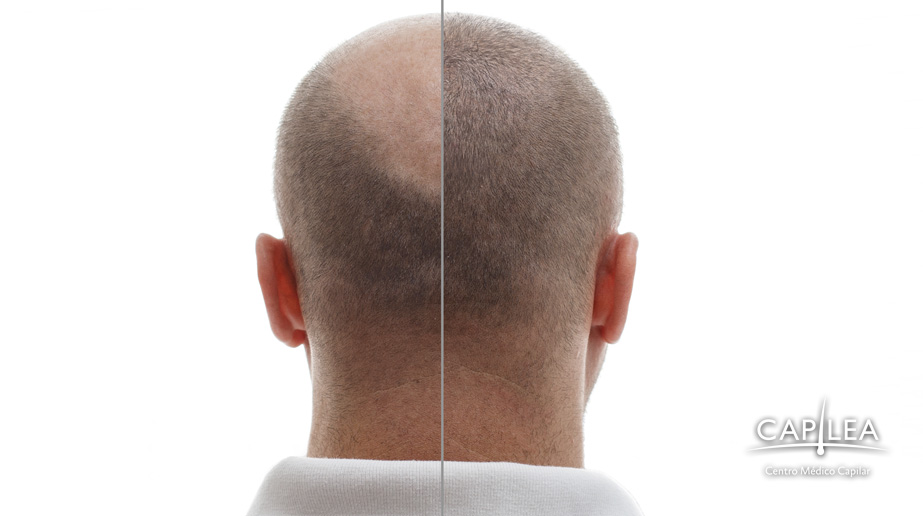
Thinking about getting a hair transplant and want to know exactly what to expect? If you’re reading this, you’re likely close to making a decision. One of the most common concerns we hear at Capilea Mexico is not about the procedure itself, but about everything that happens afterward.
Most clinics show you the “before and after” at 12 months. What’s often missing is a clear, honest explanation of the journey in between. At Capilea Mexico, we believe in transparency. That’s why we help you understand each stage of a hair graft recovery.
Hair transplant timeline: your recovery roadmap
Here’s a clear overview of what to expect throughout the process:
| Period | Phase | What to Expect |
| Day 0 | Surgery | 4–8 hour procedure, mild discomfort |
| Days 1–7 | Initial Recovery | Redness, scabbing, possible swelling |
| Days 8–14 | Active Healing | Scabs fall off, itching, improved appearance |
| Weeks 3–4 | Shock Loss Begins | Transplanted hair starts shedding |
| Months 1–2 | “Ugly Duckling” Phase | Peak shedding, temporary worsening of appearance |
| Month 3 | Dormant Phase | Little visible growth |
| Months 4–6 | First Growth | Fine new hairs begin to appear |
| Months 6–9 | Accelerated Growth | Increased density and thickness |
| Months 9–12 | Maturation | 80–90% of final result visible |
| Months 12–18 | Final Result | Full density and natural hair appearance |
Day 0: Surgery day
A hair transplantation—whether performed using FUE or DHI techniques—typically takes between 4 and 8 hours, depending on the number of grafts.
Most patients report that the experience is more comfortable than expected.
What you may feel:
- Local anesthesia is used; general sedation is not required
- Mild tightness in the donor area (back of the head)
- Slight discomfort during anesthesia application
- Minimal pain during the procedure itself
At the end of the procedure, the scalp will appear red, with small visible graft placements.
Week 1: The critical recovery period
This is the most important phase for graft survival. The follicles are not yet fully secured, so following post-operative instructions is essential.
What’s normal:
- Swelling: May move from the forehead to the eye area (days 2–4)
- Scabs: Form around each graft (do not touch them)
- Redness: In both donor and recipient areas
- Mild bleeding: Small spots during the first nights
- Headaches: More common in larger procedures
Key recommendations:
- Sleep with your head elevated for the first few days
- Apply saline solution as instructed
- Avoid physical activity and bending
- Do not wear tight caps or hats
- Perform your first wash (usually day 3) very gently
Most patients can return to office-based work the next day if needed, but physical jobs typically require additional recovery time.
Week 2: Visible improvement
During this stage, healing becomes more noticeable.
What happens:
- Scabs begin to fall off naturally
- Swelling disappears
- Redness gradually fades
- The donor area improves significantly
- Grafts become more secure
By the end of week two, many patients feel comfortable returning to their normal routine, as the scalp looks significantly better.
Weeks 3–8: The “ugly duckling” phase
This phase can be unexpected for many patients, but it is completely normal.
What is shock loss?
Shock loss refers to the temporary shedding of transplanted hair—and sometimes existing hair—after the procedure. This occurs because the hair follicles enter a resting phase as part of the natural healing response.
Importantly, the follicles remain alive beneath the skin.
What to expect:
- Transplanted hair begins to fall out
- The scalp may look uneven or less dense
- Temporary regression in appearance
- Visible thinning in the treated area
This stage is temporary and experienced by the majority of patients. Understanding it in advance helps reduce unnecessary concern.
Month 3: The dormant phase
At this point, shedding has usually stabilized, but visible growth is still limited.
What’s happening beneath the surface:
- Follicles are regenerating
- New growth cycles are beginning
- The scalp continues to normalize
What you may notice:
- Minimal visible hair growth
- Occasional small pimples or ingrown hairs
- Significant reduction in redness
Patience is essential during this stage.
Months 4–6: The first signs of growth
This is when patients begin to see tangible progress: new hair growth starting to emerge from transplanted hair follicles.
Month-by-month expectations:
Month 4:
- Around 30% of new hair may begin to grow
- Fine, light hairs appear
Month 5:
- 20–30% of the final result becomes visible
- Hair starts to gain thickness
Month 6:
- Noticeable improvement in density
- Up to 50% of the final result may be visible
Hair in this phase is still developing and will continue to thicken over time.
Months 7–9: Increased density
During this stage, the results become more evident.
What to expect:
- Greater hair density
- Thicker, darker strands
- More natural appearance
- Improved styling options
By month 9, approximately 80–85% of the final result is typically visible.
Months 9–12: Final maturation
This is when most patients see their full transformation.
By month 12:
- Hair reaches full thickness and density
- Growth appears completely natural
- Donor and recipient areas are fully healed
- Hair can be cut, styled, and treated normally
At this stage, it becomes difficult to distinguish between transplanted and native hair.
Months 12–18: Final refinement
Although 12 months is often considered the final result, subtle improvements may continue.
Especially in:
- The crown area (which develops more slowly)
- High-density procedures
- Hair texture and overall volume
A follow-up consultation at this stage allows your specialist to evaluate the final outcome.
Post-operative care
Week 1:
- Use prescribed medication (anti-inflammatory, antibiotics)
- Sleep with your head elevated
- Begin gentle washing as instructed
Weeks 2–4:
- Use a mild shampoo
- Avoid scratching or removing scabs manually
- Limit sun exposure
- Avoid intense physical activity
Months 1–6:
- Continue medical treatment if prescribed (e.g., minoxidil or finasteride)
- Attend follow-up appointments
- Avoid chemical treatments such as hair dye
- Maintain a balanced, nutrient-rich diet
We accompany you throughout the process
A hair transplant procedure is a progressive process that requires patience. Each stage has a medical reason and forms part of a natural and lasting end result.
At Capilea Mexico, we accompany each patient through all phases of treatment to maximize results. I am Dr. Héctor Treviño, and I am here to clarify all your doubts. Schedule a valuation appointment and recover your hair and confidence.
FAQ
When can I return to work?
Office-based work can typically be resumed the next day. Physically demanding jobs may require additional recovery time, usually between 1 and 3 weeks.
When can I exercise again?
Light activity can be resumed in a few days. Intense exercise can be resumed after 3–4 weeks.
Is it normal to feel itchy scalp?
Yes. Itching is part of the healing process, especially during the first few weeks. It is important not to scratch to avoid damaging the grafts.
Is transplanted hair permanent?
Yes. Transplanted follicles are resistant to DHT, the hormone responsible for hair loss, making results long-lasting.
When will I see real results?
The first changes appear between months 4 and 6. The final result is observed between 12 and 18 months.