
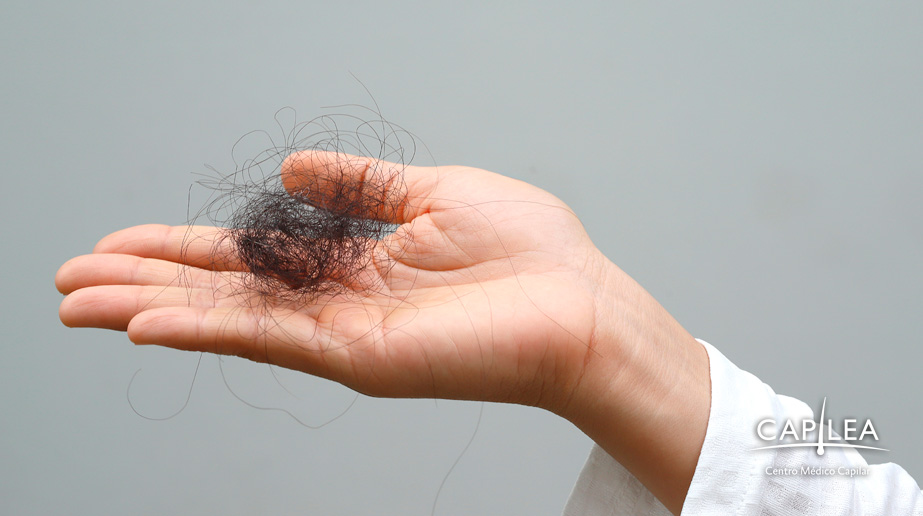
Finding more hair than usual on your pillow, in the shower, or on your brush can lead to a very common question: why is my hair falling out?
Hair shedding does not always mean you are developing baldness. Losing some hair every day is a normal part of the hair growth cycle. However, if you notice reduced density, more visible areas of the scalp, or ongoing shedding for several months, there may be an underlying cause that should be identified.
Genetics, hormonal changes, stress, diet, medical conditions, and certain medications can all contribute to hair loss. Because each type of hair loss is different, the right treatment depends on what is causing it.
How does hair grow?
To understand why your hair is falling out, it helps to know how the hair growth cycle works. Every hair follicle goes through several stages:
- Anagen phase: The active growth phase, which can last between 2 and 6 years on the scalp.
- Catagen phase: A short transition phase that lasts approximately two to three weeks.
- Telogen phase: The follicle enters a resting phase that lasts around three months.
- Exogen phase: The hair sheds, allowing a new hair to begin its growth cycle.
Under normal conditions, most follicles are in the growth phase, while only a small percentage are resting. This is why losing some hair every day is considered normal.
How much hair loss is normal each day?
Losing around 70 to 100 hairs a day can be part of a normal hair cycle. The amount can vary depending on factors such as age, genetics, hormonal changes, diet, and overall health.
Instead of counting every hair you find on your brush, it is more useful to pay attention to changes in overall density. A receding hairline, a widening part, or less coverage at the crown can be signs of progressive hair loss.
Taking photos every three months under similar lighting and from similar angles can help you identify gradual changes that may otherwise be difficult to notice.
Why is my hair falling out?
There are many possible causes of hair loss, including genetic, hormonal, and environmental factors. Some of the most common types include:
Androgenetic alopecia
Male and female pattern hair loss is the most common cause of progressive hair loss. It is associated with the sensitivity of certain hair follicles to dihydrotestosterone (DHT). Over time, affected follicles gradually miniaturize, producing thinner and weaker hair.
In men, it commonly appears as a receding hairline and reduced density at the crown. In women, it is more common to see a widening part and reduced density across the top of the scalp, while the frontal hairline is generally preserved.
Telogen effluvium
Telogen effluvium causes diffuse shedding that often appears two or three months after a triggering event.
Possible triggers include physical or emotional stress, surgery, pregnancy and the postpartum period, hormonal changes, restrictive diets, nutritional deficiencies, thyroid disorders, and certain medications.
Once the underlying trigger is identified and addressed, the hair can gradually return to its normal growth cycle.
Alopecia areata
Alopecia areata is an autoimmune condition that can cause round or oval patches of hair loss. It may affect a small area or extend across the scalp and, in some cases, other areas of the body with hair.
Traction alopecia and hair damage
Tight hairstyles, extensions, and other styles that keep the hair under constant tension can cause traction alopecia. In its early stages, it may be reversible. However, prolonged tension can permanently damage the follicle.
Bleaching, chemical straightening, hair dye, and excessive heat can also weaken the hair shaft and cause breakage, making the hair look thinner or less full.
Medical conditions and scarring alopecias
Certain thyroid disorders, iron deficiencies, autoimmune diseases, and infections can cause diffuse hair loss.
There are also scarring alopecias, such as lichen planopilaris, discoid lupus, and folliculitis decalvans, which can permanently destroy the hair follicle.
Redness, inflammation, pustules, pain, burning, or scarring on the scalp are signs that you should see a specialist as soon as possible.
When should you see a hair loss specialist?
It is a good idea to seek an evaluation if you notice:
- A receding hairline or progressive loss of density
- Round patches of hair loss
- Sudden or excessive shedding
- Itching, burning, pain, or inflammation of the scalp
- Persistent pustules or scaling
- Loss of eyebrows or eyelashes
- Hair loss accompanied by fatigue, weight changes, or hormonal changes
An early evaluation can help identify the cause and determine whether the goal should be to slow hair loss, restore density, or treat an underlying scalp condition.
How is hair loss diagnosed?
The diagnosis begins with a medical history and examination of the scalp. A hair specialist or dermatologist will evaluate when the hair loss started, how it has progressed, family history, and any possible triggers.
Trichoscopy allows the specialist to examine the hair follicles and scalp in greater detail. Depending on the findings, additional tests may include a complete blood count, iron and ferritin levels, thyroid function, vitamin levels, or hormone testing.
Not everyone needs the same tests. Laboratory work should be requested based on the symptoms and characteristics of each individual case.
What treatments are available for hair loss?
The right treatment depends on the cause of the hair loss and may involve one or several approaches.
Medical treatment
For androgenetic alopecia, some of the most commonly used treatments include minoxidil, finasteride, and dutasteride, always following a medical evaluation.
For women with certain patterns of hair loss and hormonal changes, a specialist may also consider antiandrogen or hormonal treatments.
These treatments require consistency and several months of follow-up before their results can be properly evaluated.
Treatment for telogen effluvium
When telogen effluvium is responsible for hair shedding, the main goal is to identify and address the underlying trigger. This may involve treating a nutritional deficiency, reviewing medications, addressing a hormonal imbalance, or restoring an adequate diet.
Treatment for alopecia areata
Depending on the extent and progression of the condition, treatment may include topical therapies, injections, or other treatments aimed at controlling the immune response.
FUE hair transplant
When hair loss is permanent and the follicles in an affected area no longer produce enough hair, a FUE hair transplant may be considered.
A hair transplant does not create new follicles. Instead, it redistributes follicular units from a donor area to areas where hair density has been lost.
Before undergoing a transplant, it is important to evaluate the stability of the hair loss, the donor area, and how the condition may progress over time.
What situations can cause hair loss?
Pregnancy and the postpartum period: Hair shedding often appears three or four months after childbirth and is usually temporary. If it is severe or continues for an extended period, it may be worth ruling out anemia or thyroid problems.
Menopause: Hormonal changes can contribute to both telogen effluvium and female pattern hair loss, making reduced density more noticeable.
Children and teenagers: Scalp ringworm, alopecia areata, trichotillomania, and traction alopecia are some of the causes that may need to be considered.
Chemotherapy and radiation therapy: These treatments can cause rapid and widespread hair loss. In many cases, hair grows back after treatment ends, although recovery can vary from person to person.
What can you do to take care of your hair?
Some everyday habits can help keep your hair and scalp in better condition:
- Maintain a balanced diet with enough protein.
- Avoid highly restrictive diets and rapid weight loss.
- Reduce tension from very tight hairstyles.
- Limit the use of flat irons and other heat-styling tools.
- Avoid excessive bleaching and chemical treatments.
- Address scalp conditions such as dandruff or seborrheic dermatitis.
- Get enough sleep and find ways to manage stress.
- Avoid constantly switching treatments. The hair growth cycle takes time to show changes.
When should you consider a hair transplant?
A hair transplant may be an option when hair loss is permanent, the donor area is adequate, and expectations are realistic.
The first step is to determine the cause of the hair loss. When androgenetic alopecia is involved, it is generally important to make sure the condition is sufficiently stabilized before considering surgery.
This allows the specialist to plan the distribution of follicular units more effectively while preserving the donor area for the future.
Find the right solution for your hair loss at Capilea
Hair loss can be temporary or part of a progressive form of alopecia. That is why, instead of looking for a general solution for hair loss, the most important step is to identify what is causing it.
At Capilea Mexico, we evaluate each case individually to determine whether medical treatment, hair transplant, or a combination of approaches is the right option for you. Schedule your complimentary consultation.
FAQ
Can hair loss be related to diet?
Yes. Not getting enough protein, iron, or other nutrients can contribute to hair loss. However, you should not take supplements on your own. It is important to first confirm whether a deficiency is actually present.
Does cutting your hair make it grow back stronger?
No. Cutting your hair changes its length and appearance, but it does not affect how the follicle works or make the hair grow faster or thicker.
Does washing your hair every day cause hair loss?
No. Washing your hair does not cause alopecia. It can simply make hairs that were already in the shedding phase more noticeable during a shower. The right washing frequency depends on your hair and scalp type.
Can you regrow hair that has already been lost?
It depends on the cause and the condition of the follicles. When the follicles are still active, certain treatments may help preserve or restore hair density. When a follicle has been permanently destroyed, other options, such as a hair transplant, may be considered.