
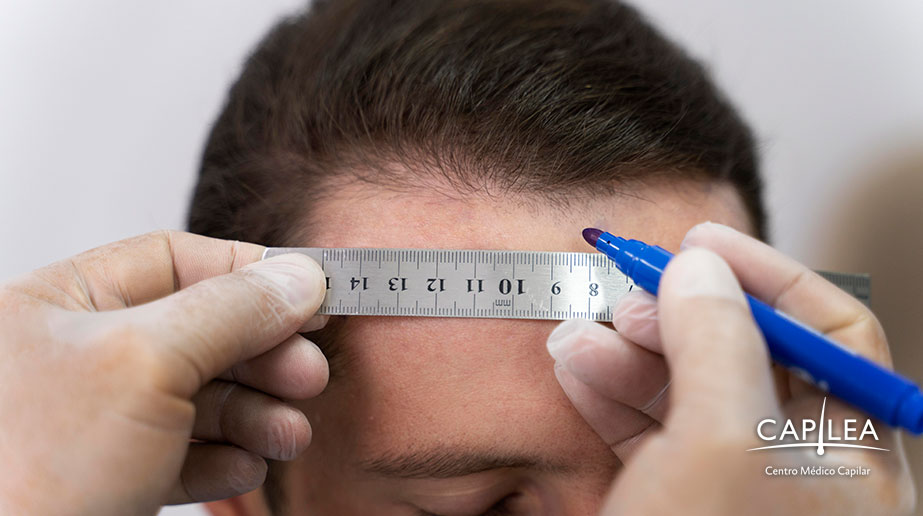
Advances in hair restoration have evolved at an impressive pace, offering increasingly effective solutions with natural results. One of the most innovative options is the Sapphire FUE.
What is the Sapphire FUE?
The Sapphire FUE technique is a direct and sophisticated evolution of the FUE method (Follicular Unit Extraction), which consists of extracting individual hair follicles from the donor area.
Its innovation lies in the tool used: instead of traditional steel instruments, surgeons use blades made from synthetic sapphire.
Sapphire blades transform the hair grafting procedure. Thanks to their extreme sharpness, they create “V”-shaped micro-incisions that are smaller, more precise, and cleaner than the “U”-shaped cuts made with steel blades. This precision:
✔ Reduces trauma to the scalp.
✔ Minimizes damage to surrounding tissues.
✔ Creates the ideal conditions for transplanted follicles to thrive.
The Sapphire FUE technique does not change the extraction method but perfects the implantation phase, which is crucial for determining the density, angle, and naturalness of the final result.
Advantages of the Sapphire Hair Transplant method
Greater accuracy
The use of sapphire blades provides more control when creating channels. The smaller, V-shaped incisions make it possible to place follicles closer together, achieving greater hair density.
More natural results
The precision of sapphire blades allows surgeons to replicate the natural angle and direction of hair growth. This results in a perfectly integrated hairline, avoiding the “doll hair” effect.
Faster and more comfortable recovery
Because scalp trauma is significantly reduced, postoperative inflammation, redness, and scabbing are minimized. Patients also report less discomfort.
No visible scars
Micro-incisions heal so efficiently that scars become virtually invisible once the recovery process is complete.
Higher graft survival rate
The precision of sapphire incisions ensures a perfect fit for each graft, reducing the risk of movement or damage. This environment promotes a very high graft survival rate.
Hair transplants generally have a success rate of 97% or higher, and advanced techniques like FUE Sapphire help maximize this potential.
Differences between FUE and Sapphire FUE
- Blade material: Conventional FUE uses stainless steel blades, while FUE Sapphire uses synthetic sapphire blades.
- Incision shape: Steel blades create “U”-shaped channels, whereas sapphire blades create precise “V”-shaped microchannels.
- Tissue trauma: With FUE Sapphire, bleeding, swelling, and scabbing are significantly reduced.
- Hair density: Smaller, closer incisions with sapphire blades allow for a higher number of grafts to be placed.
How is the Sapphire FUE procedure?
1. Consultation
The doctor analyzes the degree of alopecia, the quality and density of the donor area, and discusses the patient’s expectations.
2. Preparation
On the day of the procedure, the donor area is shaved for precise follicle extraction. Local anesthesia is applied so the patient feels no discomfort.
3. Extraction of follicular units
Using a motorized micro-punch, follicular units (1 to 4 hairs each) are removed and preserved in a special solution.
4. Micro-incisions with sapphire blades
The surgeon uses sapphire blades to create micro-incisions in the recipient area, following the pattern, angle, and density defined in the consultation.
5. Implantation of grafts
Each follicular unit is carefully implanted into the channels with special tweezers, ensuring the correct depth and direction without damaging the follicles.
The procedure typically lasts between 6 and 9 hours, depending on the number of grafts required.
Ideal candidates for Sapphire Hair Transplant
This technique is best suited for people who have:
- Stable hair loss patterns: Ideally, androgenetic alopecia (male or female pattern baldness) should have progressed to a predictable stage.
- A healthy, dense donor area: Good density on the back and sides of the head ensures enough grafts can be harvested without thinning the donor area.
- Good general health: Patients must be in overall good health to minimize risks and promote proper healing.
- Realistic expectations: The goal is a natural aesthetic improvement, not the full restoration of original hair density.
Postoperative care
- Avoid touching or rubbing the implanted area in the first few days.
- Sleep with your head elevated to reduce swelling.
- Wash gently 2–3 days after the procedure, following medical instructions.
- Avoid direct sun exposure, strenuous exercise, saunas, and swimming pools for the following weeks.
What to expect after the procedure?
- Temporary shedding: Transplanted hair may fall out within the first 2–4 weeks, a normal process known as “shock loss.”
- New growth: New, permanent hair begins to grow from the transplanted follicles around the 3rd to 4th month.
- Visible improvement: Noticeable results typically appear after 6 months.
- Final outcome: Maximum density is usually achieved between 12 and 18 months.
Schedule an appointment with hair restoration experts
Experience, technology, and a reputable clinic are key factors in achieving the best results from a hair transplantation surgery.
I am Dr. Héctor Treviño, Director of Capilea Mexico, a hair clinic with more than 25 years of experience. I will personally guide you through your hair restoration process. Schedule a free online consultation and regain both your hair and your confidence.
Frequently Asked Questions
What is the main advantage of the FUE technique?
The main advantage is that it does not leave linear scars in the donor area, since follicular units are extracted individually.
Is the FUE procedure painful?
No. It is performed under local anesthesia, so patients do not experience pain during the procedure.
Is the FUE technique suitable for everyone?
Not everyone is an ideal candidate. Suitability depends on factors such as donor hair quality and the extent of hair loss.
Are FUE hair transplant results permanent?
Yes. Transplanted follicles are resistant to hair loss and will continue to grow naturally for a lifetime.
What is the cost of an FUE transplant?
The cost varies by country, clinic, and the number of grafts. In Mexico, prices typically range from $2,500 to $4,500 USD.